
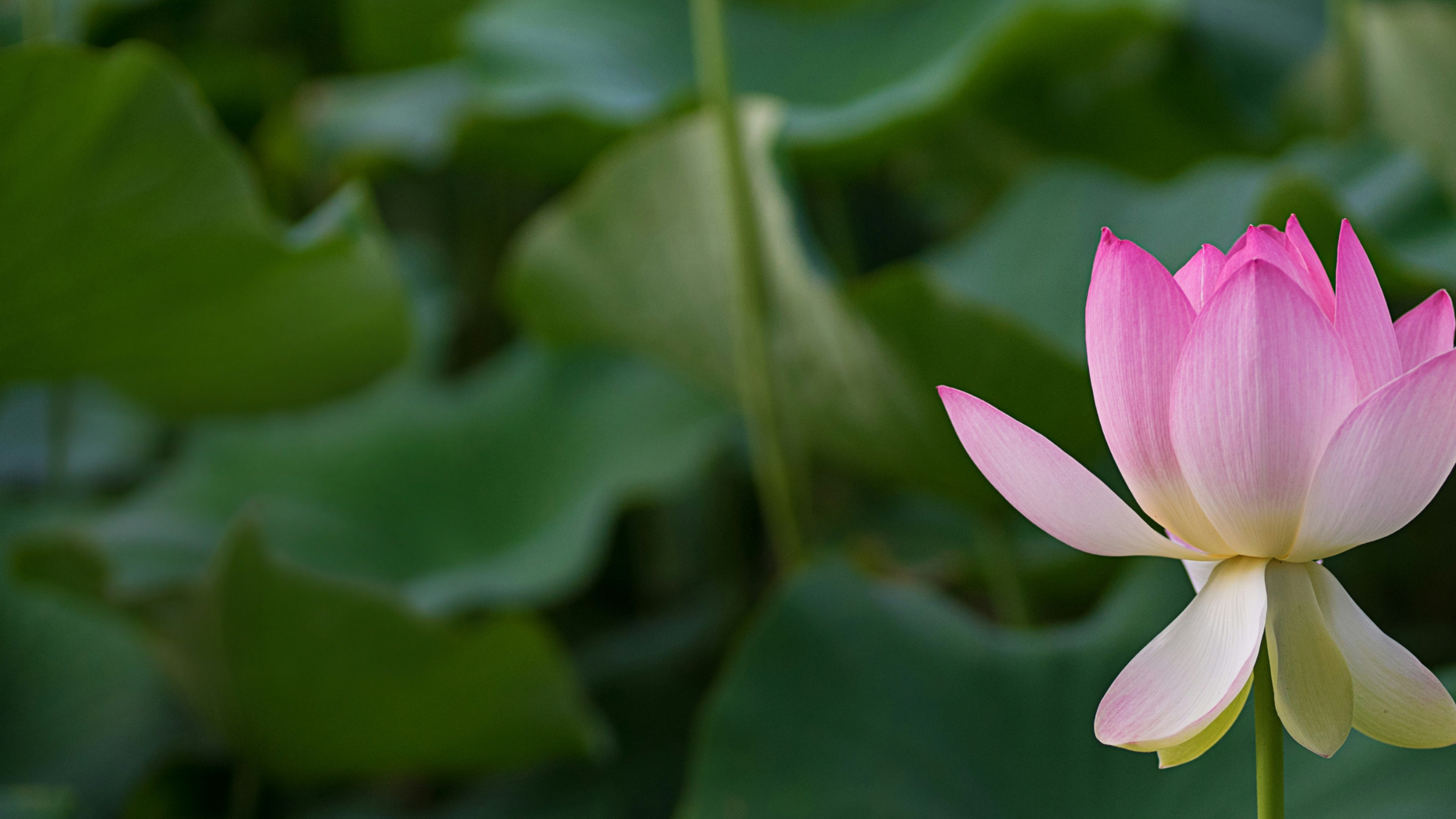
Openness
We grow up in a world that teaches us at a very young age that our surroundings are unsafe and to be cautious with whom we open up. The consequence of this is that we miss out on fully sharing our hearts; ourselves. Based on our upbringing, the beliefs we form, and the stories we make up about ourselves and others, we then attempt to be in a relationship with another person.
We grow up in a world that teaches us at a very young age that our surroundings are unsafe and to be cautious with whom we open up. The consequence of this is that we miss out on fully sharing our hearts; ourselves. Based on our upbringing, the beliefs we form, and the stories we make up about ourselves and others, we then attempt to be in a relationship with another person.
All-too-often, this is a set up for failure because we see our loved one through the clouded lens of where we came from; often times from Shame ("I am not good enough, not worthy, etc). If we aren't willing to see it for what it is, we will blame it on the other person for "never loving me the way I deserve", all the while pushing them further away.
This shame-based existence allows for addiction to rent space in our lives. After all, the addict says, "I am here to take care of you, to take away your pain, to make you feel better….come, join me in this wonderful escape."
While illusive in nature, the addict feels for a short while like it is truth; a reprieve. So we bask in it; we obsess about it. Whether we are addicted to food, sex, sugar, video games, spending, love. It often can become our relational "currency" with our partner, which sadly, replaces intimacy.
At some point, courage steps in to give us recovery, a large part of which is Openness.
Healing begins when one can set down their addiction sword and wave the white flag that exudes inner peace. Here's the reality of your situation: You have a lot to lose by staying tied up in your old ways of thinking, your out-dated stories from childhood, and your shaming beliefs.
No one can save you but yourself. You have to be the one that takes the necessary steps to heal yourself and your relationship(s). You can continue to hide, but life will find you. It's not too late. There is time. Reach out to those you love and trust (or once trusted), and say what you need to say. Open yourself up to receiving their feedback as well, void of the old stories of shaming yourself for what is said. Remember, you are not your feedback and it is just that: feedback.
Then, take an inventory of what it is that you want and need at this time in your life. Do you want to continue to close yourself off to healing yourself and your relationships, by fighting a war that is destined to have emotional fatalities??
Reclaim openness. Find that quiet space inside you that is all knowing and listen to that voice for guidance. Let yourself go into the unknown of your healing, of recovery. Ask for help, and for feedback from loved ones….then do what your ego has wanted you to avoid~
Accept it.
You are changing continually, and life is "life-ing" non-stop. The best thing you can do is open your arms to it and be ready for your own transformation. It is happening as we speak...
Remember, YOU ARE WORTH IT.
Namasté,
Candice
Are you Projecting onto Others?
Do you ever find yourself blaming, judging, pointing the finger, or displacing your thoughts, feelings and actions onto another person? In a clinical sense, we call this transference. In a general sense, this is called projection. The fascinating thing about projection is that our minds tie things together by association. We may non-consciously associate something someone says or does with a memory of something our mother, father, siblings, peers, or someone else said or did to us when we were a child or teenager.
Do you ever find yourself blaming, judging, pointing the finger, or displacing your thoughts, feelings and actions onto another person? In a clinical sense, we call this transference. In a general sense, this is called projection. The fascinating thing about projection is that our minds tie things together by association. We may non-consciously associate something someone says or does with a memory of something our mother, father, siblings, peers, or someone else said or did to us when we were a child or teenager.
This can be as seemingly forgettable as our siblings or peers teasing or picking on us when we were younger, or as overt and visceral as physical, emotional, verbal, or sexual abuse incurred at the hands of another. Whatever the case may be, we are often operating off of projections and NOT reality.The challenge then becomes the false stories we create around other people based on our inability to SEE them for who they truly are. If we only see them based on the associations we have with people in our past, then we are still living there!
I have the privilege of seeing people for who they really are in therapy. Sometimes, I only get glimpses of their authentic selves because they show up as their addict-self, their vulnerable child, or their avoidant protector.
However, I know when their authentic (functional) self shows up because they are open, honest, accountable, vulnerable, connected, and in tune with reality. Their walls come down and they let their hearts open. They are not projecting onto me or another person; they are fully accountable in the present moment.
Take a moment and ask yourself when you project your stuff onto other people? We all do it so the best thing you can do is own that you do it as well. Being accountable for our own stuff can actually be really freeing. We take responsibility for our side of the street; that is all. Nothing more.
If you project a lot, you will have a tendency to do the following (adapted from D. Chopra's The Path to Love, 1997, p. 121) :
1. Finish people's sentences for them
2. Get defensive even before you are accused
3. Use verbal formulas like "She is the type of person who…"
4. Ask someone's opinion then get angry at them for it
5. Struggle to read other people's faces, and assume you know how they feel
6. Frequently feel misunderstood
7. Take things TOO personally
8. See authority figures facial expressions and actions as a threat even when there is no justified reason
9. Believe that when your partner looks at another person (male or female) that sexual interest is being shown. You feel jealous as a result.
10. You have extreme likes or dislikes for people you hardly know.
The way to resolve this? ACCEPTANCE.
- Accept yourself for having imperfections,and accept others' imperfections as well
- Forgive your shame
- Learn to love your flaws
- Love your perfect imperfections.
We cannot love another completely without fully loving ourselves. If you struggle with this statement (especially if you have children), look at your projection.
Remember, YOU ARE WORTH IT.
Namasté,
Candice
Addicted to Love: What do you REALLY crave?
My favorite quote right now is: "The light at the end of the tunnel is not an illusion. The tunnel is."
The same can be said for being addicted to love. Love is not the illusion. However, being addicted to another person is. The belief that another person's "love"can give us self-esteem is flawed. Especially since the result would be having other-esteem, not our own. It is important to explore the definition of love addiction; the most recent of which entails "a condition characterized by severe, pervasive and excessive interest toward a romantic partner" ("Love Addiction….", 2014, Medscape.com).
My favorite quote right now is: "The light at the end of the tunnel is not an illusion. The tunnel is."
The same can be said for being addicted to love. Love is not the illusion. However, being addicted to another person is. The belief that another person's "love"can give us self-esteem is flawed. Especially since the result would be having other-esteem, not our own. It is important to explore the definition of love addiction; the most recent of which entails "a condition characterized by severe, pervasive and excessive interest toward a romantic partner" ("Love Addiction….", 2014, Medscape.com).
This pre-occupation towards another person is often at ones' own expense, leading to self-deprivation as one obsesses over the other for attention, affection, validation, and love.Love addiction, as is the case with sexual addiction, is considered an attachment disorder, along with a desire to escape uncomfortable emotions and situations associated with one's past.
Adults with love addiction (like sex addiction) typically come from rigid families, a history of emotional, physical abuse or sexual abuse and/or neglect, and have a deep-seated feeling of being inherently flawed.
Do you find yourself addicted to someone in the name of "love"?
You may not feel addicted, perhaps, but you may find yourself pre-occupied with someone else. Whatever is the case, ask yourself, "What is my preoccupation with another person really about? Can they give me the love, validation, acceptance, I crave? Or does this desire come from someone or something in my past that I need to explore and resolve?"
When folks tell me that their current addiction to another person has nothing to do with their past, it is evident that they are in denial. After all, if one comes from a healthy childhood, they will more often than not demonstrate that which was learned~healthy behavior~ in their relationships. Our own sense of shame, the belief that I am bad, leads us to seek out people, situations, and things to help us feel better and often escape our pain.
In the case of someone that is love addicted, the person of interest becomes like a drug. Without them, one experiences withdrawal, feelings of irritation, often irrational, racing thoughts, severe anxiety, depression, and in some cases, destructive and dangerous behavior.
If you feel like you are addicted to love, there is hope. There are things you can do (besides jumping into another relationship) to heal from love addiction. Here are some suggestions:
1. Attend individual therapy and begin exploring unresolved childhood issues. 2. Read a book on love addiction (Pia Mellody's book Facing Love Addiction is wonderful). 3. Attend a support (SLAA for example) or therapy group to develop healthy intimacy skills 4. Explore the anxiety that comes up when you are not around your person of interest; process your feelings with a safe person. 5. Learn tools for self love and self care (this takes much practice and is often learned in therapy). 6. Create your own hobbies and interests (i.e., exercise, yoga, social groups) 7. Learn skills for detaching and having healthy boundaries. By detaching you will start to learn healthy ways of attaching.
And as always, know that:
You are Worth It.
*Your worth is not dependent on another's approval of you. You are of value simply because you exist in this world.*
Namasté,
Candie
*Join Candice Saturday, June 14th from 10 a.m. to 2 p.m. for her annual Healing Financial Disorders Seminar. Tuition is 4 payments of $50 starting the day of the seminar, or $175 if paid in full by June 14th. Free book included. Two seats left! Email Candice today!
Embrace Your Pain.
"Pain is inevitable. Suffering is Optional"-Haruki Murakami Have you ever avoided feeling a painful emotion out of fear that you would die? You may initially say, "Well no, logically I haven't feared I would die because of something I felt."
"Pain is inevitable. Suffering is Optional"-Haruki Murakami Have you ever avoided feeling a painful emotion out of fear that you would die? You may initially say, "Well no, logically I haven't feared I would die because of something I felt."
However, if you take a moment to really think about it, you will likely be able to connect with that part of you~your "vulnerable child"~ that is actually afraid that if you feel similar emotions related to your childhood, you will actually die. It is just too painful, right?
As children, many of us were faced with situations that were simply too enormous to mentally handle. Thus, many people do what they can to forget about the painful moments, specifically drugs, alcohol, other substances or processes (sex, over eating, debting) in order to avoid feeling the painful emotions they originally felt.
Our current relationship dynamics remind us of our past experiences; thus our past emotions. We hold trauma in our cells (note: what is traumatic for one person may not be for another). If we grow up and have not resolved our past, we will literally replay and relive it in our current relationships. We may be older, look different, and have more wisdom, but the emotions stuck in our body will continue to rear their head until we address them.
What if you were to embrace your pain? What if you allowed yourself to fully embrace what you are feeling; you surrendered to it? What if you said to yourself, "I can let myself feel any emotion that I choose?" What might happen? Take it a step further, what if you were to express your pain?
Some of you may say, I can't…I fear the emotional consequences if I feel or express what I feel(Deepak Chopra, 1997, p. 175). This is often the "protective" part of you that thinks it is protecting you but really isn't. For many, this part is their addict talking.
Consider what the emotional consequences will occur if you allow yourself to feel your pain and share it with your loved one? Take a minute and mentally list the possible consequences. Now take it a step further: Ask yourself, "What are the actual emotional consequences if I don't feel my pain fully and if I continue to avoid sharing it with my spouse or loved one?" Mentally list the actual emotional and physical consequence if you are not authentic with feeling and sharing your emotions.
The reality is that you can and will survive ANY emotion. After all, you have already experienced what you consider to be too much to handle.
"…whatever you consider to be too much fear, too much loss, too much humiliation, disapproval, too much rejection has already happened" ~Deepak Chopra
The past is over. Can you let it stay there? Painful emotions that continue to arise are beautiful gifts. They remind us that we have been pushing them away and therefore need to deal with them once and for all.
The illusion that someone or something outside of us keeps us feeling our emotions is not true. What we are now holding onto is of our own choosing. Choose differently if you want to feel differently.
Tonight, tomorrow, the rest of this week, and on an on-going basis, I invite you to let yourself feel whatever it is you are feeling.
Practice the following (adapted from The Path to Love, Chopra, 1997, p. 177):
- Ask your emotion what it has to tell you or tell it you want to take a deeper look at it
- Write down what you are feeling and what part of you it is coming from (vulnerable child, protective addict or avoidant, or your true, functional self)
- If certain situations continue to trigger the same emotion, ask yourself what it is that you need to learn in order to change
- Talk through it in therapy or with a safe person (especially if the emotions are really strong and intense)
- Find a healthy way to share it with your spouse or loved one. Doing this will free yourself up to embrace the many gifts that emotions have to offer you.
You are always SO worth it!
Namasté,
Candice
*Join Jenny Jo Tuttle, LCSW, CSAT-S, an expert in treating individuals, partners and couples with intimacy disorders and multiple addictions as she facilitates our monthly Relationship Recovery Skills Class Tuesday, 5/26/14 from 6-7:30 p.m. $45 per person/$65 per couple. RSVP namasteadvice@gmail.com.
The Duality of Love
"We are surrounded by images pretending to be love" ~ Deepak Chopra (The Path to Love, 1997, p.24). Every day, in large part due to social media, we are bombarded by advertisements and images of sex, romance, and what we have learned to believe is "love." We are told what to buy, how to change our appearances, and ways to improve our social status in order to attract the "perfect" mate. However, what we have learned is not real love or even intimacy, nor is it romance or sex. It is an illusion that breeds both fear and scarcity and a constant search for the next "fix".
"We are surrounded by images pretending to be love" ~ Deepak Chopra (The Path to Love, 1997, p.24). Every day, in large part due to social media, we are bombarded by advertisements and images of sex, romance, and what we have learned to believe is "love." We are told what to buy, how to change our appearances, and ways to improve our social status in order to attract the "perfect" mate. However, what we have learned is not real love or even intimacy, nor is it romance or sex. It is an illusion that breeds both fear and scarcity and a constant search for the next "fix".
This ultimately creates duality: the idea that there is a right/wrong way to be, look, do, and have, as well as good vs. bad. Such dualities leave us believing that parts of ourselves are unloveable and therefore separate from others. This belief that we are separate from others, particularly our spouse, does not serve us. It creates this false belief that "If only I could find someone to love me, my feeling of separateness would be healed. Yet, Love doesn't EVER depend on externals. Love Is Internal.
"Love is Spirit.Spirit is the Self"~Deepak Chopra
What happens is that we detach from ourselves~from spirit~early on, thus creating a life-long search for someone to fill the void of lost innocence. We get addicted to people and things in hopes of filling that void or removing the pain associated with this duality. In our quest for external love and fulfillment, we create separateness which fuels our feelings of unworthiness and being alone. The act of going inward to re-connect with our true essence of love~of spirit~ is the first step towards recovery from anything. Though at times it may seem daunting, recovering spirit, thus pure love, is the ONLY way we will ever heal.
To Diminish Duality, We Must Go Inward.
As Deepak Chopra says,
"Asking 'What is spirit?' is just a way of asking 'Who am I?'
There isn't spirit outside of you. You are It…..You feel love towards another because in spirit you are infinite love" (The Path To Love, 1997, p. 33).
Read that statement again….and again, and again. Breathe it in fully and deeply. That is big, isn't it? This idea that YOU ARE SPIRIT; that there is nothing outside of you that can connect you to your pure essence: that which is LOVE.
I realize at this point that some of you might be feeling internally rattled after reading the above paragraph. All of this talk of love and spirit coming from the inside might feel like a bit much and even like fluff.
But what if it is ALL true? What if what you have been seeking via your addiction is actually inside of you waiting to be heard and seen, opened and discovered?
Take a minute and ask yourself "Who Am I?" and see what happens. What words come to mind? Do you start to define yourself based on your job or role in your family? Do you belittle yourself with labels and judgment? Or do you pause and think, "I don't know?"
Many people that come to therapy for addictions (both addict and spouse) respond with the latter statement, followed by a look of bewilderment. I assure them that this is normal, as they have forgotten who they truly are as the ravages of their addiction took over all aspects of their lives. Our primary role at Namaste Center for Healing is to re-connect our clients with who they truly are (hence "Namaste"~honoring the divine in you).
What if you were to let go of this idea that you are separate, starting with noticing when you feel separate from your partner or loved one (including your children)? What if you allowed yourself to notice the one-ness that exists within all of you? What if you were to stop seeking love on the outside and used kinder, more loving words with yourself from the inside? How might your relationships and life look differently? Practice going inward today, this week. See what happens when you seek from the inside.
Always Remember, You are Worth It.
Namasté,
Candice
**Reminder: Sign up for my Financial Workshop that is on June 6th, 2014 and learn tools for healing your relationship with money as well as understand the interwoven relationship between money and sex/intimacy. Space is limited so email me today!