
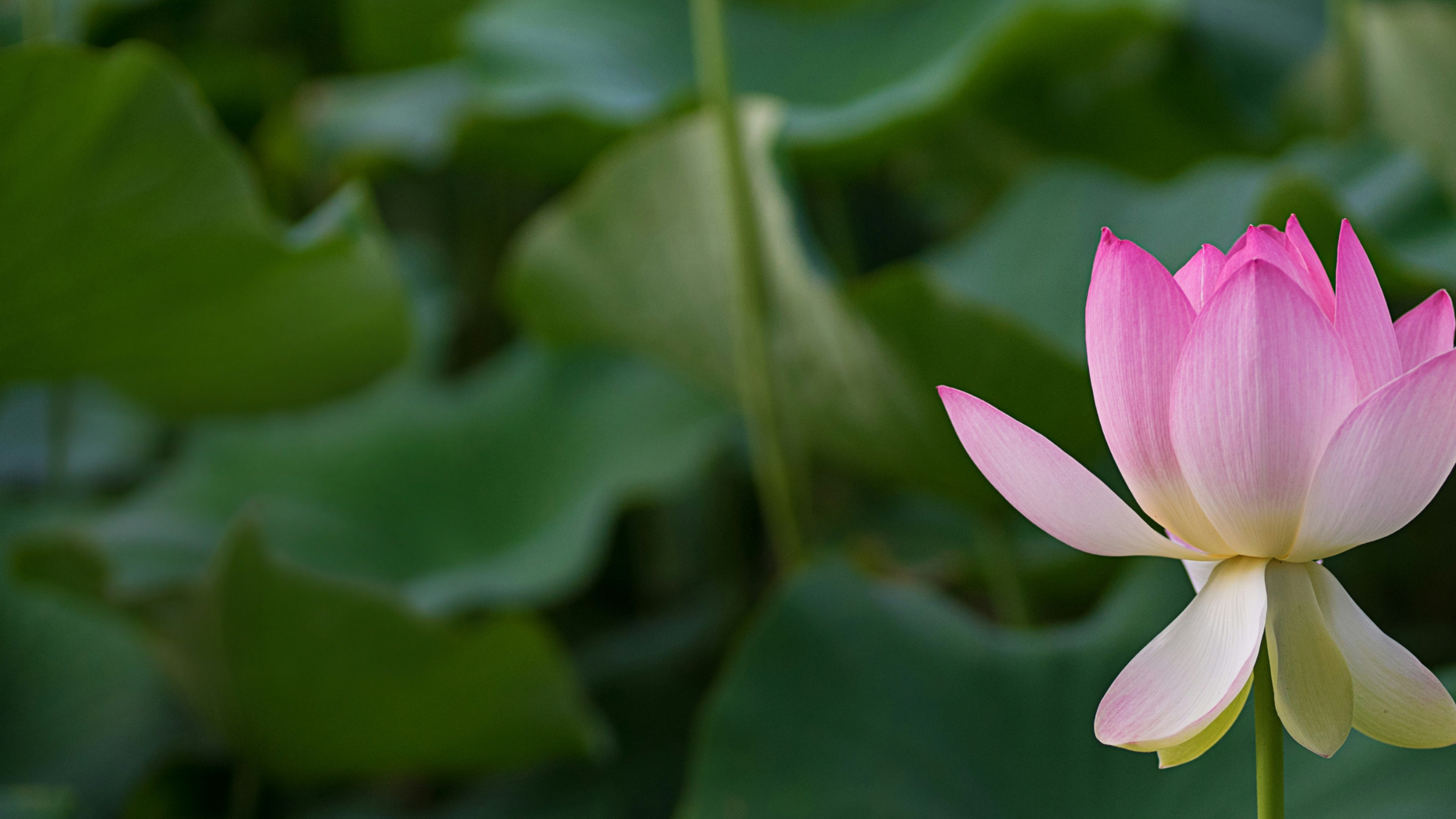
The Art of Experiencing Pure Pleasure: It is Not What You Think
The picture in this week's blog, a beautiful rainbow, was taken from my hotel balcony the last day of my recent trip to Maui. Sadly, the image was too big to upload on my website. However, I was able to upload it on my regular blog; you can see the picture if you sign up to receive my blog (go to our home page on the top right to sign up). To me, the picture symbolizes the epitome of pleasure and what Hawaii represents: the spirit of Aloha. Many people don't understand what Aloha actually entails. My experience of Aloha in Maui paved the way for this week's blog post.
The picture in this week's blog, a beautiful rainbow, was taken from my hotel balcony the last day of my recent trip to Maui. Sadly, the image was too big to upload on my website. However, I was able to upload it on my regular blog; you can see the picture if you sign up to receive my blog (go to our home page on the top right to sign up). To me, the picture symbolizes the epitome of pleasure and what Hawaii represents: the spirit of Aloha. Many people don't understand what Aloha actually entails. My experience of Aloha in Maui paved the way for this week's blog post.
As Landess Kearns, Associate Editor for HuffPost Hawaii explains so eloquently in her article titled, 5 Ways to live life with more Aloha (2015), while Aloha means hello and goodbye as well as a moral code, it is also "an expression of love and a connection to nature." Kearns adds that those who live in Hawaii know the idea of Aloha well and those that are repeat visitors are drawn to the islands because of the spirit of Aloha.
As cited in Kearns' article, the late great teacher of Hawaiian spirituality Haleaka lolani Pule described Aloha beautifully. She said that Aloha is ..."our innate sense to love things unconditionally...It's a symbiotic relationship and the acknowledgment of that symbiotic relationship that you have with everything in the universe around you and recognizing exactly your space within it."
Aloha is something that is felt, like feeling the warm hug from a loved one, or experiencing the savory taste of a delicious fruit in your mouth, or being the recipient of a kind gesture.
Aloha reminds me of how I felt in Maui as I made the mindful, intentional, and very conscious effort to experience daily pleasure and by this I am not referring to sex (although I realize that we are sexual beings, and, as Patrick Carnes so poignantly says, "Sexuality is our most meaningful expression of our spirit. You cannot touch one without touching the other" (2009)). I am referring to something much deeper than the pleasure experienced solely from sex.
I am referring to the spirit of Aloha that lives inside each of our hearts, that gives us a sense of pure, unconditional pleasure, love, and joy.
As the owner of a very beautiful and busy healing center, I realized that prior to going to Maui I had lost my sense of Aloha; my daily pleasures. I found myself experiencing symptoms of compassion fatigue, which is a common response experienced by many healers in the helping profession. As someone that wears many hats (business woman, forensic evaluator, and therapist to name a few), people sometimes forget that I too am a human being who has feelings. Folks at times can be downright abusive, slanderous, and mean, including making public attacks as a distraction to their own suffering. The last couple of months were fraught with this type of painful energy and while I practiced daily meditation in an attempt to stay grounded, brought in a Reiki healer to clear our work/healing space, exercised daily, attended my own therapy, and practiced my daily mindfulness techniques and reframing, by the time my trip came, all the negativity had really taken a toll on my spirit.
My spirit of Aloha, my bank account for experiencing the little pleasures that have historically brought me peace, joy and happiness, was feeling pretty empty. I needed a deposit and fast.
For me, I needed to get away from my day to day environment. But the Spirit of Aloha, of experiencing daily pleasure, can happen where you are at any given time.
The biggest thing I learned in Maui that helped keep me connected to the spirit of Aloha (the art of pure joy and pleasure) from any location, is to take a moment and look up at the sky. I know this might sound cheesy but for me, the most consistent thing that I have, something that is always there, is the sky. Whether I am in Maui or Utah, the sky, with all of its fluid movements and artistic elegance is always above me moving along with me in each moment. Isn't that magnificent?! The beauty the sky offers, be it in the gift of the morning sunrise where the sky is filled with an array of fiery colors, or after a rain when a delicate rainbow appears, or at night, when the stars come out and all the constellations appear to remind us of the mystery of life. That is sheer pleasure! That is the spirit of Aloha. It is also really grounding.
Some may say that connecting to the earth with bare feet such as walking on grass or hugging or climbing a tree connects them to the spirit of Aloha. Connecting to earth in these ways feeds our spirits, our inner children, and believe it or not, allows us to experience pure and innocent pleasure. Try climbing a tree with your children and watch what happens!
Embracing nature is indeed a key element to staying attuned to Aloha. As I am typing this, I am outside on my patio listening to the orchestra of crickets as they play their beautiful harmonious symphony that echoes through the trees. I can hear the faint sound of thunder in the background and feel the slight breeze on my cheek. That is Aloha, that is pure pleasure. It also keeps me right here in this moment, which is very calming (for those of you reading this that have a lot of anxiety, try this).
Other ways to experience Aloha (joy and pleasure):
- Eat a piece of fruit such as an orange. Take time to slowly peel it, feeling it in your hands, then taste each bite, letting the sensation sit in your mouth for a moment before devouring it. Let yourself be present to how savory this experience is. Do it with your loved one and see what happens.
- Embrace a loved one or someone you care about in a warm, loving, kind hearted hug. Be open to giving as much as receiving.
- Cultivate strong and loving connections with people you trust. These reciprocal relationships will be life long and can give you joy, love, and so much Aloha.
- Love unconditionally. Easier said than done as we are all judgmental (I know, that is hard to swallow but true). Start by loving yourself for all your flaws and all your wonders. See yourself with the eyes of love no matter what! Watch what happens when you do it (it is pretty amazing). Then practice loving others without conditions or judgment. It is pretty amazing.
- Be optimistic; see the rainbows and silver linings in all things, even the haters, happiness-crashers, and judgers. We see what we believe so what if you changed what you believed and practiced being more positive?
- Express appreciation. If you practice gratitude every day, I promise you that your life would be full of Aloha and daily pleasure. Try this: On nights when you can't sleep, go through a list of all the things you are thankful for and let yourself fall into a deep and lasting slumber. I practice daily gratitude in a journal; I strongly encourage folks do this-the outpouring of abundance that comes is amazing!
We are living in a very challenging time in America and across the globe. Healing for all is needed now more than ever. Many folks with addiction issues are unable to regulate discomfort in their bodies so they seek out escapes via orgasm, porn, people (hookups), substances, food, video games (all of the above), etc. Regardless of the addiction or affliction you are facing, finding the spirit of Aloha, the little pleasures and joys of daily living, with love that is unconditional and lasting, will create and internal sunshine that no one can darken. This is a key part of your healing process. If you can master this, you will have lasting recovery. And with practice, your entire experience of the world around you will shift, you will have more peace, more joy, more pleasure; more Aloha.
With that being said, dear ones, always know you are worth it.
Aloha~
Candice
Picture: by candicechristiansen© 2016
My mailing address is: candice@namasteadvice.com
Want to change how you receive these emails? You can update your preferences or unsubscribe from this list
Part 2 in a Series about Sex: "From Getting off to Getting Real"
This Friday, June 24th, my colleague Jackie Pack, CSAT and I are hosting an event for professionals and community members called "Let's Talk About It", starting the conversation about porn being a public health issue and the reality that porn addiction really exists.
This Friday, June 24th, my colleague Jackie Pack, CSAT and I are hosting an event for professionals and community members called "Let's Talk About It", starting the conversation about porn being a public health issue and the reality that porn addiction really exists.
However, during our three events, we will also talk about sex. Specifically, how do we talk about healthy sexuality in a way that is palatable to youth, couples and families? Sex, after all, is about so much more than parts and gettingoff. Yet, with today's numerous hook up apps, and the obsession with social media, pop culture, and porn (violent porn now being the primary form of sex education for our youth), sex has become a matter of function, and with that comes a lot of dysfunction(Perel, E., Mating in Captivity, 2006, Audibles).
As Esther Perel discusses in her book, Mating in Captivity (2006, p. 73), "[The] emphasis on physical achievement rather than desire and pleasure goes hand in hand with the emphasis on genitals, and reinforces the dominant male orientation." She adds, "The subjective experience of sexual pleasure is replaced by....erection, intercourse, orgasm (p.73).
How can we fully experience surrender, sensuality, intimacy, and connection when we are preoccupied with the frequency, duration, and intensity of the next sexual experience? When we become so obsessed with the mechanics of sex (how often, performance, etc) instead of the actual art of sex, we invoke perpetual dysfunction in our relationships.
Maybe it is time we get off of "getting off" and get real about what sex is and how we can reclaim it. Sex is not just about function, object, or orgasm; it is not about violence or image after image of airbrushed bodies. It is not the mere act of going through the motions. Sex is about love, surrender, sensuality, intimacy, connection, vulnerability, desire, and eroticism. It involves independence, dependence, and interdependence. Real sex includes consent and choice. It involves passion and spontaneity; a dip into the unknown while fully embracing what is known.
Talking about sex needs to start young and include all the elements of sex: what love is and isn't, what consent is and isn't, what it means to really connect with someone, how to be intimate in a healthy way.
For sex/porn addicts, learning how to engage in sex with one's partner in a healthy way takes time, attention and intention, and a new focus. That focus is on their partner and connecting on a deeper level-raw, vulnerable, open with all the elements previously discussed.
Getting real about sex instead of just getting off creates lasting intimacy and connection. It starts with a conversation, one that gets to be on-going. Sex is really beautiful if it is given a chance to be experienced as such.
If you haven't signed up for our June 24th event, whether you are a professional wanting to come for CEs, or a community member wanting to attend our free evening event, trust me, it will be worth your while. Join us and let's start this very important conversation about sex.
In case you forgot, remember, you are worth it.
Namasté,
Candice
*This blog is based on Esther Perel's book Mating in Captivity (2006).
Check out what's happening at Namasté~
JUNE 24TH PROFESSIONALS EVENT: Earn CEs: Email meg@namasteadvice.com for a flyer! Come listen to expert neurosurgeon Dr. Don Hilton talk about Porn Addiction as a Public Health Issue and how to talk to your clients about healthy sexuality.JUNE 24th FREE COMMUNITY EVENT: Email meg@namasteadvice.com for a flyer and learn ways to protect your family from porn in a porn culture. Dr. Hilton will speak at this event as well; Fight the New Drug, Jackie Pack and I will do a panel discussion on healthy sexuality.
JULY 16, 17TH: Mastering the Trauma Wound Weekend Workshop with Candice and Cari. Come learn how trauma has impacted your brain and body, as well as simple mindfulness based tools for healing your mind, body and spirit! Only seven seats available! RSVP (or for a flyer): candice@namasteadvice.com; cari@namasteadvice.com.
COMING IN AUGUST: "Embracing Desire and Eroticism as a Couple" A Workshop for Couples; Facilitated by Candice and Cari....stay tuned for details!
Picture: by pinterest.com
Copyright © Namaste Center for Healing 2016, All rights reserved.
Our mailing address is: candice@namasteadvice.com
Want to change how you receive these emails? You can update your preferences or unsubscribe from this list
Part 1 in a Series: "Sex: Eroticism Thrives in Unpredictability"
Over the past several months, I have been researching the topic of sex for a book that my colleague Meg and I are writing on non-contact sex crimes. Doing so has gotten me more interested in studying healthy sexuality.
Since so many of our clients come to us in distress about various intimacy issues, including partner betrayal, sexual addiction, pornography addiction, sexual/intimacy anorexia, we set a goal for our clients to be able to embrace healthy intimacy and sexuality, though to achieve this can seem like a long and arduous road.
Over the past several months, I have been researching the topic of sex for a book that my colleague Meg and I are writing on non-contact sex crimes. Doing so has gotten me more interested in studying healthy sexuality.
Since so many of our clients come to us in distress about various intimacy issues, including partner betrayal, sexual addiction, pornography addiction, sexual/intimacy anorexia, we set a goal for our clients to be able to embrace healthy intimacy and sexuality, though to achieve this can seem like a long and arduous road.
While our focus at Namasté is to assist men and women in healing their relationship with themselves as well as their relationships with their loved ones (especially so that they may experience healthy intimacy and sexuality with their partner), the topic of healthy sex and intimacy isn't fully addressed for awhile since so many come to us literally in crisis due to acting out behaviors, or having just found out about the betrayal.
At any rate, it is an important discussion to be had. Therefore, this blog is the first in a series of four where I will talk about healthy (relative these days, I realize) sex.
I am currently listening to the audio book mating in captivity by sex therapist Esther Perel. In it she explains that in her years of working with couples she has found time and time again that "Eroticism thrives in unpredictability" (2006). At first when I heard this statement I thought, "Of course eroticism thrives in unpredictability; I see it everyday with my clients who are male and female sex addicts." But as I continued to listen to Perel, I realized that she was referring to the typical eroticism experienced in all relationships, not just eroticism experienced in one's addiction. Although there are definitely similarities.
Perel explains that the more we attach to someone the more we have to lose. Therefore, she says that we do our best to seek out predictability in our relationships, often at the expense of passion, excitement, and the unpredictability in which eroticism thrives.
Think about the relationships you have been in; there was always a honeymoon phase where you felt lust and limerence towards your partner. You couldn't wait to see them, to spend every moment with them. You felt an immense amount of joy and laughter, ease and pleasure just at the mere sound of their voice. There was something especially sexy about not knowing everything about them; the mystery of getting to know them was indeed alluring.
Then what happens? For many reading this, an addiction poisoned the relationship. The castle crumbled as the betrayal of porn, mistresses, chatrooms, strip clubs, drugs/alcohol, gambling, etc. all of the above, crept in. However, perhaps other typical life events may have also occurred (especially if you are getting healthier in your recovery). For instance, maybe you moved in together, had children, experienced the physiological changes that come with aging, have increased stress, have too many deadlines and not enough time, have pent up resentment and anger, or illness...
These are real issues that everyone will likely face at one point or another in their lives. Add to this our efforts to find the comfort of predictability that everyone ultimately wants and it literally has the capacity to drain the life out of the excitement, passion and edge that we felt at the onset of our relationship.
I have heard many couples say, "We have a great relationship, I feel so close to him/her, but we don't have sex." In a thorough assessment process, we may indeed find that their is trauma, betrayal, or physiological issues that are impeding the sexual part of the relationship. I used to discuss with couples the importance of being connected via intimacy (non-sexual, talking,etc.) outside the bedroom to be connected inside the bedroom. However, I am learning that there may be more to this for eroticism to occur longterm....
Perel asserts that, "Separateness is a precondition for connection.... Too much closeness can impede intimacy...[and] increased intimacy decreases desire."
Wait a minute....what? Too much closeness can impede intimacy? Increased intimacy actually decreases desire? For some, what Perel is saying may not be true. Intimacy may actually increase desire, sexual adventure, and eroticism within the relationship. I have worked with many couples who increased their level of connection and intimacy and their sex lives flourished. But what about the couples that have intimacy and closeness but struggle with eroticism, desire, and having sex?
What if there is something to this idea of needing some unpredictability and mystery in the relationship to maintain a healthy sense of sexual desire longterm?
For couples struggling with betrayal, predictability is elemental in re-establishing safety and trust in the relationship. After all, with the addiction came a hell of a lot of unpredictability, uncertainty, and crazy-making scenarios. But in general, outside of an addiction-filled relationship (or if you are in recovery), what if there is some truth to needing a bit of uncertainty to maintain the awe that was felt at the onset of the relationship? And if there is some truth to this, how do we rekindle the mystery?
As you begin your week, take some time and consider the following as you think about your current partner and relationship:
What caused you to fall in love with your current partner? What drew you to them? What did you notice? What about them lit you up inside? Why did you "pick" them to be your longterm love companion? What was it about them that was different from others you dated; that led you to choose them to be your partner longterm? What keeps you together? What would it look like to have some mystery in your current relationship? Can you create that in a healthy way? Do you really know everything about your partner (many think they do but don't)? Have you taken the time to step back to watch your love companion at a family gathering, or listen to them talk to others and found yourself noticing how attractive, sexy, beautiful, or hot you feel they are? Have you taken a moment to see them outside of the predictable world you two live in and look at them with new eyes? From a different standpoint?
If, as Perel argues, eroticism thrives in unpredictability, is it possible for you and your loved one to create some healthy mystery in your relationship to test out her assertion? If so, what might that look like?
Stay tuned for part two of our discussion of "Sex" in a series of four....
As always, precious ones, know that you are SO worth it.
Namasté,
Candice
*This blog is based on Esther Perel's book Mating in Captivity (2006).
Check out what's happening at Namasté~
JUNE 24TH PROFESSIONALS EVENT: Earn CEs: Email meg@namasteadvice.com for a flyer! Come listen to expert neurosurgeon Dr. Don Hilton talk about Porn Addiction as a Public Health Issue and how to talk to your clients about healthy sexuality.
JUNE 24th FREE COMMUNITY EVENT: Email meg@namasteadvice.com for a flyer and learn ways to protect your family from porn in a porn culture. Dr. Hilton will speak at this event as well; Fight the New Drug, Jackie Pack and I will do a panel discussion on healthy sexuality.
JULY 16, 17TH: Mastering the Trauma Wound Weekend Workshop with Candice and Cari. Come learn how trauma has impacted your brain and body, as well as simple mindfulness based tools for healing your mind, body and spirit! Only seven seats available! RSVP (or for a flyer): candice@namasteadvice.com; cari@namasteadvice.com.
Picture: by blossom_organics.com
Copyright © Namaste Center for Healing 2016, All rights reserved.
Our mailing address is: candice@namasteadvice.com
Want to change how you receive these emails? You can update your preferences or unsubscribe from this list
Spring Cleaning: Getting Back to Basics in Recovery and Relationships
Springtime is supposed to be a time of renewal, a time of beautiful awakenings; a time of enlightening rebirth. The flowers begin to bloom, the trees and bushes begin to develop signs of new growth. A variety of birds chirp each morning awakening us to the newness of each day. The sky is mostly blue, the sun is mostly out; and amidst the sporadic rainstorms, we are enveloped by a cool and familiar breeze.
Springtime is supposed to be a time of renewal, a time of beautiful awakenings; a time of enlightening rebirth. The flowers begin to bloom, the trees and bushes begin to develop signs of new growth. A variety of birds chirp each morning awakening us to the newness of each day. The sky is mostly blue, the sun is mostly out; and amidst the sporadic rainstorms, we are enveloped by a cool and familiar breeze.
Everything around us feels fresh.
Except our recovery ....
Why is that? Why is it that in the Springtime, folks' recovery tends to feel like it is in a rut, or takes some weird and unusual downward spiral, which often includes lapsing, "edging", or even a full blown relapse?
For one thing, emotions tend to be heightened in the Springtime. I recently visited my regular acupuncture place (Qiworkscommunityacupuncture.com-check it out it's fabulous) in Salt Lake City. My acupuncturist asked me if I was feeling angry. I was a bit bewildered by this as I didn't think I came across as such. I was also surprised by my response when I said matter of factly, "Why yes, yes I have felt really angry lately." She chuckled as she gently smiled and whispered, "Everyone seems to be angry right now. This is not a surprise, since anger is the emotion of Spring."
My mouth dropped in surprise. After all, I had always had a vision of Springtime being what I previously described (as a kid I added rainbows and unicorns to my Springtime fantasy). I thought Springtime was supposed to be about rebirth and renewal. Not anger.
But indeed, a lot of people enter Springtime with an anxious, irritable energy that ends up turning into anger, dis-ease (or literal disease), discomfort, sadness; for some, suicidality. A lot of folks struggle to deal with these challenging emotions; they don't have the healthy resources or support to process though them. Therefore, many people find themselves engulfed in various addictive behavior. This can entail abusing substances, abusing porn, over-spending, over-eating, over-exercising, checking out on social media, cheating, flirting with disaster, being addicted to chaos, working too much, all of the above.
A lot arises in the Spring. From a physical standpoint, and I learned this from both my acupuncturist and Namasté's very own Functional Medicine Practitioner Cari Junge, our bodies have built up toxins from the winter months. Therefore, in the Springtime (and Fall too) it is good to "cleanse"physically, but naturally we must cleanse mentally and emotionally as well. We release both emotionally and physically what no longer serves us. Hence why we do spring cleaning; often we do it literally in our households without realizing that our physical and emotional "house" needs to be cleansed too.
In our relationships, we tend to experience a weird type of springtimefunk too. Especially in intimate relationships, we may notice that we bicker more than usual. Maybe it is over silly things or past issues, but tension abounds. Communication can seem challenging among our loved ones with a lot of misunderstanding. This may include some passive aggressive or even aggressive interactions. We may notice that we are irritated at small things that our partner does that typically don't matter so much; however, right now they drive us crazy. We may find ourselves searching for flaws in our relationship instead of cherishing the little things in our partner that made us grow to love them in the first place. Our sexual and non-sexual intimacy may decrease as well; sometimes it may feel almost awkward and we can't pinpoint why.
All of this is pretty typical in the Springtime. What is essential during this time is to pay attention to our reactions. Especially since typical or not, our responses to these challenging emotions and triggers may not be very healthy, leading many people to act out during the Spring.
Getting back to basics in one's recovery and healing is essential. This, above all, will help to improve one's mood as well as their relationships.
Getting back to basics entails the following:
- Review your successes in recovery and in your relationship. There are more successes than you may even realize! Notice the small wins as much as the big ones (i.e., we cooked dinner together and laughed tonight; I stayed sober one more day; I didn't over spend today; I came home on time from work). Reviewing/reflecting is best done by journalling. So many people balk at journalling, but I swear by it. Writing our thoughts down in the quiet of the morning or evening is truly healing. We get answers that we would never get if we didn't take time to get quiet and connect with our inner peace. Do it!
- Cleanse! Believe it or not, there are healthy cleanses out there. By physically cleansing, we give our emotional body an opportunity to cleanse too. I always had a view of cleansing being starvation or diet-related which I wasn't into until I met Cari and learned that cleansing truly can be healing to our bodies, cells, organs, etc (cari@namasteadvice.com). Best thing I have ever done to clear out the physical (and emotional) crud and feel fresh/new (a guided cleanse with a professional is recommended).
- Practice being present with your partner. Mindfulness often misunderstood. It doesn't only entail meditation; it entails being in the moment. We get so caught up with work/school/kid demands that we often get home and check out via t.v., social media, kids homework, staring at a wall. By taking time to connect with our partners, even if it is at the beginning of our day and the end of our night, keeps the foundation of our relationship solid.
- S.O.S. This means Skin on Skin, as my colleague, CSAT and relationship expert, author Pat Love, Ed. so poignantly explains. This is essential for staying connected in our love relationships. Non-sexual touching is so important in relationships. A kiss, a hug, a touch keeps us connected. After all, we are wired for connection; without it we literally die (attachment theory).
- For those who are in therapy for an addiction/aversion-getting back to basics means pulling out our basic tools and reviewing them. Review your cycle, and the interventions you have learned in treatment. Commit to self-intervening. Review your relapse scenarios and discuss it in therapy and group. Review your Personal Craziness Inventory and Boundaries List (Carnes, P., Facing the Shadows, 2015). Stay honest; when we talk about what is going on, we stay out of cycle! Re-commit yourself to do the basic things you did in the beginning of your recovery to get back on track. They work!
Springtime definitely brings up a lot for people, but it doesn't have to cause as much havoc as we historically have allowed. By tuning into our bodies, our minds, and our hearts, we make it easier to tune into our loved ones and those around us.
Sit. Stay. Heal. --Pema Chodron.... Beautiful, simple words for this glorious time of rebirth, renewal, re-awakening.
As always, precious ones, know that you are SO worth it.
Namasté,
Candice
Picture: by recovery101blog.wordpress.com
Copyright © Namaste Center for Healing 2016, All rights reserved.
The Truth About Love: What it Is and Is Not
There is a youtube video of famous real life artists Marina Abramovic and Ulay; two long lost lovers who reunite at her MomA Retrospective, "The Artist is Present" in NYC. Her exhibit involves her sitting quietly for 700 plus hours looking into strangers eyes and connecting with them with feelings not words. Without her knowing, Ulay shows up and sits in front of her. What happens is exquisitely powerful.
There is a youtube video of famous real life artists Marina Abramovic and Ulay; two long lost lovers who reunite at her MomA Retrospective, "The Artist is Present" in NYC. Her exhibit involves her sitting quietly for 700 plus hours looking into strangers eyes and connecting with them with feelings not words. Without her knowing, Ulay shows up and sits in front of her. What happens is exquisitely powerful.
To see the clip, click on the following link:
https://www.youtube.com/watch?v=CAID_2iKO5Y
The love between these two individuals is palpable. Time stands still, even if only for a moment. And yet their connection is everlasting. There are no words, just a look and a touch... and love, which endures after many, many years.Similar to Marina and Ulay, many of us have experienced feeling this type of love; an everlasting sensation that withstands time and overcomes all hardships. It is a feeling of connecting to one's own spirit all the while connecting to our partner's. It is embracing our truest essence without any expectations. It is a humble sense of compassion for someone we hold dear to our hearts. It is a felt sense of affection in the deepest form.
While many of us can say that we have experienced love in this sense, others have shared wanting this type of love but never fully having it. They may crave it, feel lonely for it; they may yearn and long for it. But it has been outside of their reach. Still others may think they know what love is, but actually don't have the slightest idea.
We each define love differently based on our unique experiences with our primary attachment figures beginning at infancy (0-2 years of age to be exact). From there, we build on this idea of love throughout our lives. Based on various small or large "traumatic" events (everyone has trauma-shame, for example, is traumatizing and we all have experienced shame) some people may define love as being able to withstand hardships, while others may define it as having the ability to see and be seen (vulnerability). Some might define it as sex, possession and/or control. Others may equate love with fear, hurt, and/or pain. It all depends on our experiences with love. Love may be a way of coping with our past, or a way of escaping our present or future.
However we define love, it can either be a means of enhancing who we truly are or be cause for on-going confusion and suffering.
We often seek to find love in another person, which makes sense since as humans we are wired for connection. Our first love in our earthly existence is towards our mothers, whom we shared intimate space for 9 months. We form our initial attachment to her at birth, and although we may not have attached securely, we still attached, sometimes clinging to a dream of having pure love returned to us. Then we attempted to replicate this "love" whether it was healthy or not via other relationships, starting at a very young age. Humans are very creative and resilient beings in this regard.
Based on our life experiences, many of us learn the truth about love; what love is and what it is not.
What Love IS:
A Feeling of deep affection A humble sense of compassion for another Connection to your and another's true essence Being able to be vulnerable-trusting the ability to be seen- with an intimate partner A sense of surrender and agreeable compromise Big, expansive, global Healing Pure A universal feeling
What Love is NOT:
Love is not possession It is NOT jealousy It is NOT control It is NOT sex It is NOT anger (although we may feel angry at times while being in love) It is NOT hurting another or causing harm It is NOT abuse of any kind It is NOT trauma bonding It is NOT fear based It is NOT small, constricting, or limiting It is NOT addiction or affliction
These are not exhaustive lists; however, they provide us with a general understanding of what love is and what it is not.
Many folks get addicted to love, to the feeling of being attached to someone at their own expense. We call this type of addicted love codependency for loved ones of individuals with substance abuse issues, or loveaddiction for folks with intimacy disorders. I define love addiction as codependency on steroids.
In reality, being addicted to love is about being addicted to catching, latching andattaching to someone. The person that gets addicted to loving another person is actually addicted to attaching to someone in order to relieve their deep-seated insecurities, loneliness, sadness, heartache, longing, and pain from childhood. The other person becomes their drug. This is not love. Addiction is not love.
So what is the point of exploring the truth about love? How might it help you in your everyday life?
Learning what love is and what love isn't is the first step in having an incredibly beautiful love affair with yourself. Yes, I said love affair. It gives you an opportunity to re-parent yourself first so that you are able to love whole-heartedly in your intimate relationships. We can't truly love others if we don't know how to love ourselves. This may sound Cliché perhaps but it is true.
Having a love affair with yourself can be a truly healing experience, especially if you have spent your life running from yourself and your own healing. It begins with educating yourself on the origins of where you learned about love. It evolves into defining love based on your past, present and even future self. From there, you will begin to explore love in your daily life, talking with your loved ones about the idea of love, and practicing sharing and receiving love-all the while being open to being truly IN love; In love with yourself, with your situation, with those around you, with life.
That is the beginning of an undying love-of self and others. That is the truth about love.
Always know that you are worth loving; you are worth all of it!
Candice
Picture: askgeorgia.com
Copyright © Namaste Center for Healing 2016, All rights reserved.
Our mailing address is: candice@namasteadvice.com
Want to change how you receive these emails? You can update your preferences or unsubscribe from this list