

Blog
The Beautiful and Messy intimacy Recovery Process...
Imagine if you will you find out that your partner of however long has been either cheating on you with real life people or cheating on you with pornography, sending sexual pictures, and getting “atta boys” or “atta girls” via flirting on social media. You feel horrified, shocked, devastated, a bit of disbelief, anger, sadness, fury, and all the rest of the feelings on the feelings wheel at what you have just found out.
After the first or second or third confrontation, back and forth arguments, and challenging encounters trying to wrap your head around this tragedy, you courageously make the phone call to us for therapy. You partner, somewhat reluctantly (uncertain of whether or not therapy will help) decides to come. And thus the beautiful and messy intimacy recovery process begins.
What helps people heal from damaged intimacy neuropathways? Is it talking it out? Is it education about the “why” that led the individual to cope in the maladaptive ways? Is it trauma informed therapy? How about holistic approaches? What about couples therapy, including intensives?
We believe that it is all of the above.
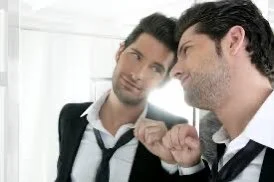
In Love With A Narcissist?
Are you in love with a narcissist but find that you often struggle with their lack of empathy towards you, need for attention, and inflated sense of importance? Narcissists are typically engaging, charismatic, seductive, and exciting, especially in the beginning of your relationship. After some time, however, and especially if you “out shine” them, they will exhibit the following:
an inflated sense of importance at your expense
a deep need for excessive attention and admiration
lack of empathy for others
Interpersonally exploitive behavior
Arrogant behavior
Exaggerate achievements and talents
Be preoccupied with fantasies about success, power, brilliance, beauty or the perfect mate
Believe they are superior and can only associate with equally special people
Monopolize conversations and belittle or look down on people they perceive as inferior
Expect special favors and unquestioning compliance with their expectations
Take advantage of others to get what they want
Guest Blog:Autistic Adult Andrew Edwards Shares His Experience Dating
All guest bloggers’ opinions, thoughts and feelings are their own.
“When a high-profile U.K. television dating programme approached me out of the blue in March 2018, my initial thought was that it could potentially boost my working profile rather than help me find love. However, I went along with the process and was filmed for six weeks in various locations in my life in North East Wales during June/July 2018.
It didn’t work out in the end and the show didn’t go to air as the show’s hierarchy thought that hadn’t shown myself to be “autistic enough”. Also, there was a significant age gap with the girl selected was much younger than myself.
Nonetheless, after this “experience”, and much cajoling from one of my close mates, I believed that I had the impetus to join online dating. It seemed to be the social norm these days for couples to meet in this way rather than what would have been my preferred old-fashioned.
Befriending Your Autonomic Nervous System
We live in an unprecedented time where the fear of disease (e.g., COVID) is at an all time high. Sadly, and ironically, chronic stress and anxiety taxes our autonomic nervous system, breaking down our body’s ability to fight disease. This is the same for covert and overt trauma which can include (this is not an exhaustive list): chronic childhood neglect, chronic shame throughout one’s lifetime, overt abuse of any kind (e.g., domestic abuse, sexual abuse), living in war or a war-torn environment, witnessing others suffer, betrayal trauma. As a result of chronic stress and trauma on our autonomic nervous system, we are more susceptible to health problems such as migraine headaches, seizures, gastrointenstinal issues, inflammation, and autoimmune diseases (e.g., arthritis, celiac, multiple sclerosis, Graves’ disease).
Our Autonomic Nervous System
Indeed the connection between trauma and health is a complex one, specifically because we have so much to still learn about our bodies. One aspect of our body that has gained a lot of attention in the last decade is the vagus nerve which has been considered to be a potential “off switch” for disease. The vagus nerve extends from the brainstem down into your stomach and intestines, through your heart and lungs, and connecting your throat and facial muscles. The nerve fibers that exist throughout your stomach and intestines are referred to as the enteric brain (second brain). The vagus nerve is a key player in the mind-body connection as it is behind our gut instinct. Through his Polyvagal Theory, Dr. Stephen Porges has proposed that there are three evolutionary stages of the vagus nerve that impact the regulation or dysregulation of the autonomic nervous system. Learning to be aware of, understand, and befriend these aspects of our autonomic nervous system can result in lasting mental and physical wellness.

Online Dating Tips During a Pandemic
As the world gets used to living with our faces covered by masks to prevent the spread of COVID-19, we also feel distant and separate from one another in more ways than one. We hear people describe feeling depressed, anxious, isolated and alone now more than ever. Many don’t see an end in sight. For those people who are in intimate relationships, the pressure stay connected with their loved one let alone deal with all the other added pressure (potential for unemployment, financial stress, mental health issues, physical illness, homelessness, children having different school schedules) can feel completely overwhelming.
But what if you are single during the holidays and Pandemic where going places wearing a mask doesn’t really lend itself to meeting new people? Better yet, what if you have severe anxiety or other mental health issues, are autistic, have ADHD, or have a history of being in toxic relationships? How are you supposed to date in a semi-constructive and “healthy” fashion?
Here are some helpful tips to consider when online dating: